Common Scams
July 30, 2024
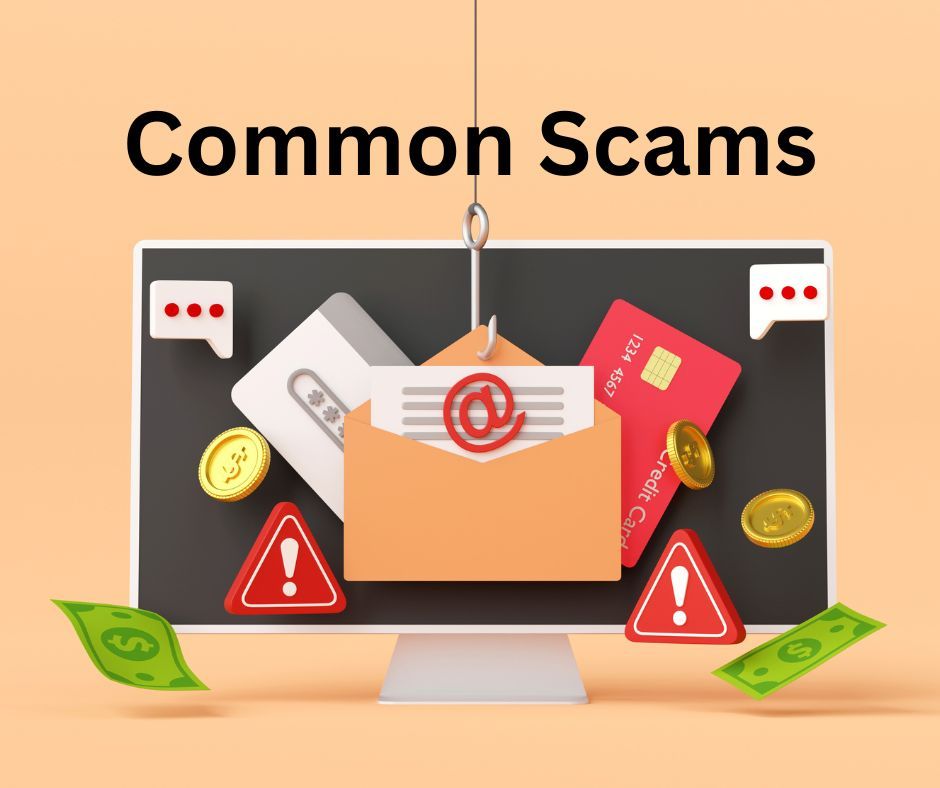
Romance. Grandparents. Sweepstakes. Gift Cards. What do all these things have in common? They are frequently used to scam people out of their hard-earned money.
Below you will find some examples of common or popular scams to be on the look out for so you can protect yourself and your money.
- Government impersonation: government impersonation scammers pretend to call you from a government agency, like the FBI, Social Security Administration or IRS. They say something bad will happen—you’ll go to jail, for example—if you don’t pay.
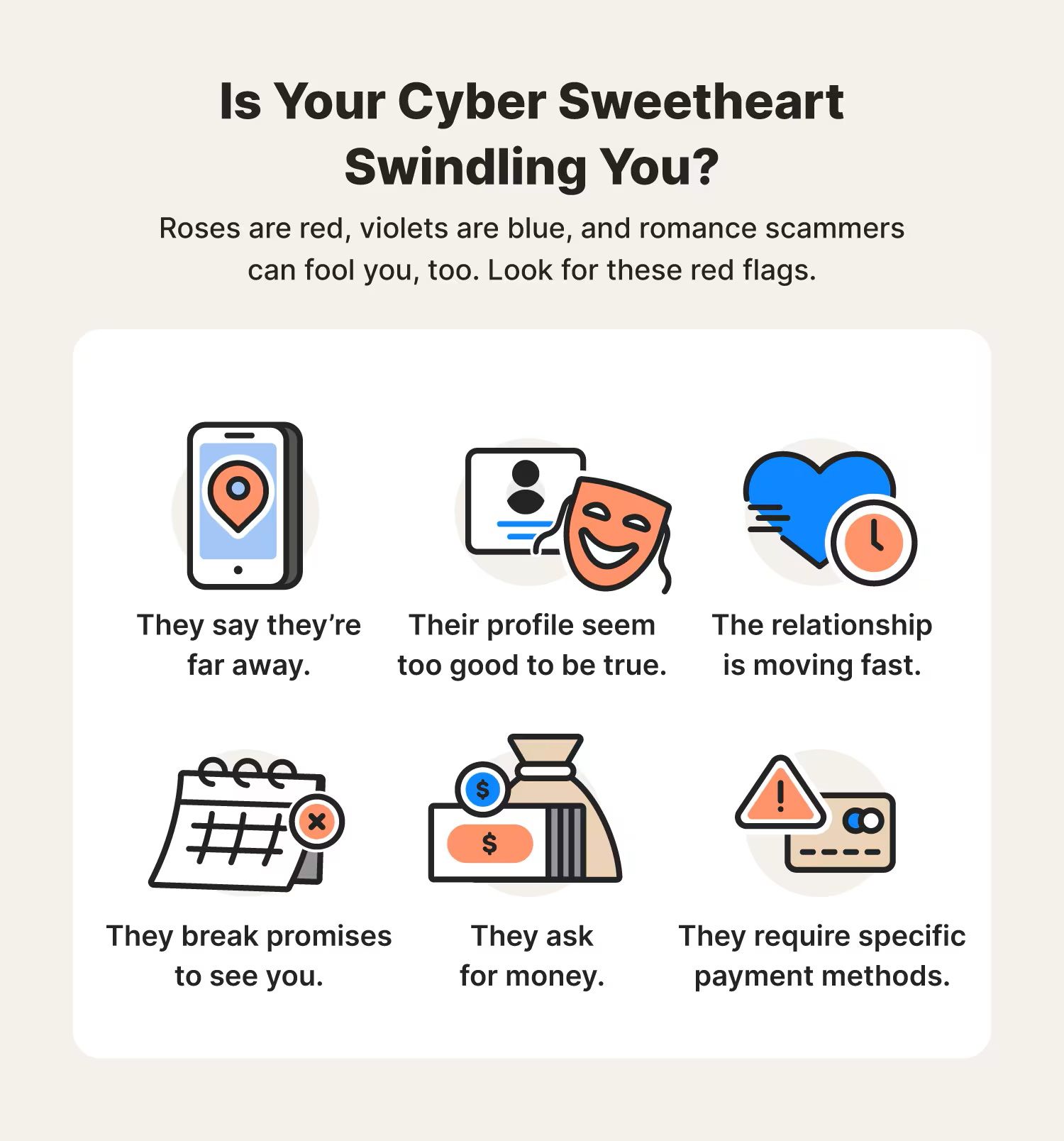
- Romance/confidence: Often posing as military or a trades person working overseas to avoid meeting face-to-face, these scammers develop fake online personas to gain the trust and affection of their victims before asking for money for emergencies.
- Grandparent: a grandparent scam involves the scammer impersonating a loved one who is in trouble and needs money. These scams have become even more convincing in recent years due to artificial intelligence that can mimic anyone’s voice.
- Lottery/sweepstakes/inheritance: The victim is told they’ve won a prize or inherited a large sum of money, which they can only access if they pay taxes and fees upfront, or if they give up their identity and bank account information for direct deposit.
- Investment: Victims are asked to tap retirement accounts, home equity or credit cards, and put their money into low-risk investments with guaranteed returns. Investment scams often take the form of pyramid schemes, market manipulation or real estate investing. More recently, criminals have been using cryptocurrency for their investment scams, asking victims to purchase crypto, like Bitcoin or Ethereum, and transfer it to their digital wallet.
- Non-delivery: Fake advertisements entice people to order and pay for items online. They either never receive the order or get something completely different from what was advertised.
- Gift cards: Posing as a business or government agency, the scammer will request payment in gift cards, telling their victim to send them the numbers on the back of the cards. The scammer convinces the consumers to go to a nearby store (e.g., Walmart, Target, Walgreens, or CVS) to purchase a gift card. he scammer then directs the consumer to scratch off the security film on the back of the gift card and read out the numbers to the scammer. The scammer can then remotely access and retrieve the gift card’s value or, more commonly, the gift card information will, be sold and resold on a secondary market.
Often predators also target people who are seeking relief from financial stress. Below are a few common scams targeting people already experiencing financial strain.
Protect yourself before you’ve been scammed
Identity Theft Freeze Law
- This law allows anyone to contact the credit bureaus (Equifax, Experian, and TransUnion) and request a credit freeze…it’s FREE
- The freeze must be placed within 3 days after the request and within 10 days you will be provided a unique PIN
- You can temporarily life or “thaw’ your report for a specify amount of time
- We recommend this be done for anyone under the age of 18 or any senior citizen that has no need to open new credit
https://www.ag.state.mn.us/Consumer/Publications/CreditFreezesFraudAlerts.asp
Our Recent News
Every year, Catholic Charities of the Diocese of St. Cloud recognizes individuals, families, and organizations whose lives and work reflect extraordinary service to others through the Good Samaritan Award . Inspired by the biblical Good Samaritan, recipients are people and organizations who see a need, respond with compassion, and make a lasting difference in the lives of their neighbors. At the 2026 Good Samaritan Awards Dinner and Reception, held September 15 at Harvester Square, Catholic Charities proudly honored Mark Thelen and Associated Wholesale Grocers (AWG) for their outstanding commitment to serving others and strengthening communities throughout Central Minnesota. What Is the Good Samaritan Award? The Good Samaritan Award is presented annually to individuals, families, and businesses whose generosity, leadership, and service create meaningful impact across Central Minnesota. Recipients embody the spirit of selfless service, helping those most in need without seeking recognition or reward. Their actions support Catholic Charities' mission to serve and enhance human dignity for people of all faiths and beliefs, while inspiring others to make a difference in their communities. Mark Thelen: A Legacy of Compassion and Community Leadership For decades, Mark Thelen has helped shape the Central Minnesota community through both his professional leadership and philanthropic efforts. As founder of Thelen Advertising, Mark built strong relationships throughout the region and developed a deep understanding of the challenges facing local individuals and families. Those experiences inspired a lifelong commitment to giving back. Through his work with the Central Minnesota Community Foundation and his support of numerous nonprofit organizations, Mark has invested in efforts that help people meet basic needs, overcome barriers, and build brighter futures. For many years, he has been a dedicated supporter of Catholic Charities, helping ensure that individuals and families facing hardship have access to programs and services that provide hope, dignity, and stability. Mark's story is one of the quiet generosities. His legacy reflects humility, compassion, and the belief that communities become stronger when people step forward to help one another. His impact can be seen not in recognition received, but in the lives improved through his steadfast commitment to serving others. Watch Mark Thelen's Good Samaritan Award recipient video to learn more about his remarkable story. Associated Wholesale Grocers (AWG): Partnership in Action Catholic Charities also proudly recognized Associated Wholesale Grocers (AWG) for its extraordinary partnership and commitment to community well-being. As a primary partner in Catholic Charities' Food Rescue efforts, AWG plays a critical role in helping nutritious food reach individuals and families across Central Minnesota. Through ongoing donations and support, AWG has helped expand food access while reducing waste, ensuring that valuable resources benefit those who need them most. Their commitment extends beyond food donations. Through the AWG Cares Foundation, employee volunteerism, sponsorship of community initiatives, and long-term partnership with Catholic Charities, AWG has demonstrated what is possible when businesses invest in the communities they serve. The impact of this partnership is felt every day by families experiencing food insecurity and by communities working to ensure that everyone has access to nutritious food and essential support. AWG's leadership, generosity, and dedication to serving others make them a deserving recipient of the 2026 Good Samaritan Award. Watch AWG's Good Samaritan Award recipient video to see the impact of their partnership in action. Thank You to Our Honorees Catholic Charities is deeply grateful to Mark Thelen and Associated Wholesale Grocers for their commitment to serving others and advancing our mission. Their generosity reminds us that meaningful change happens when individuals and organizations choose to invest in the well-being of their neighbors. Congratulations to our 2026 Good Samaritan Award recipients. Thank you for being examples of compassion, service, and community leadership throughout Central Minnesota.
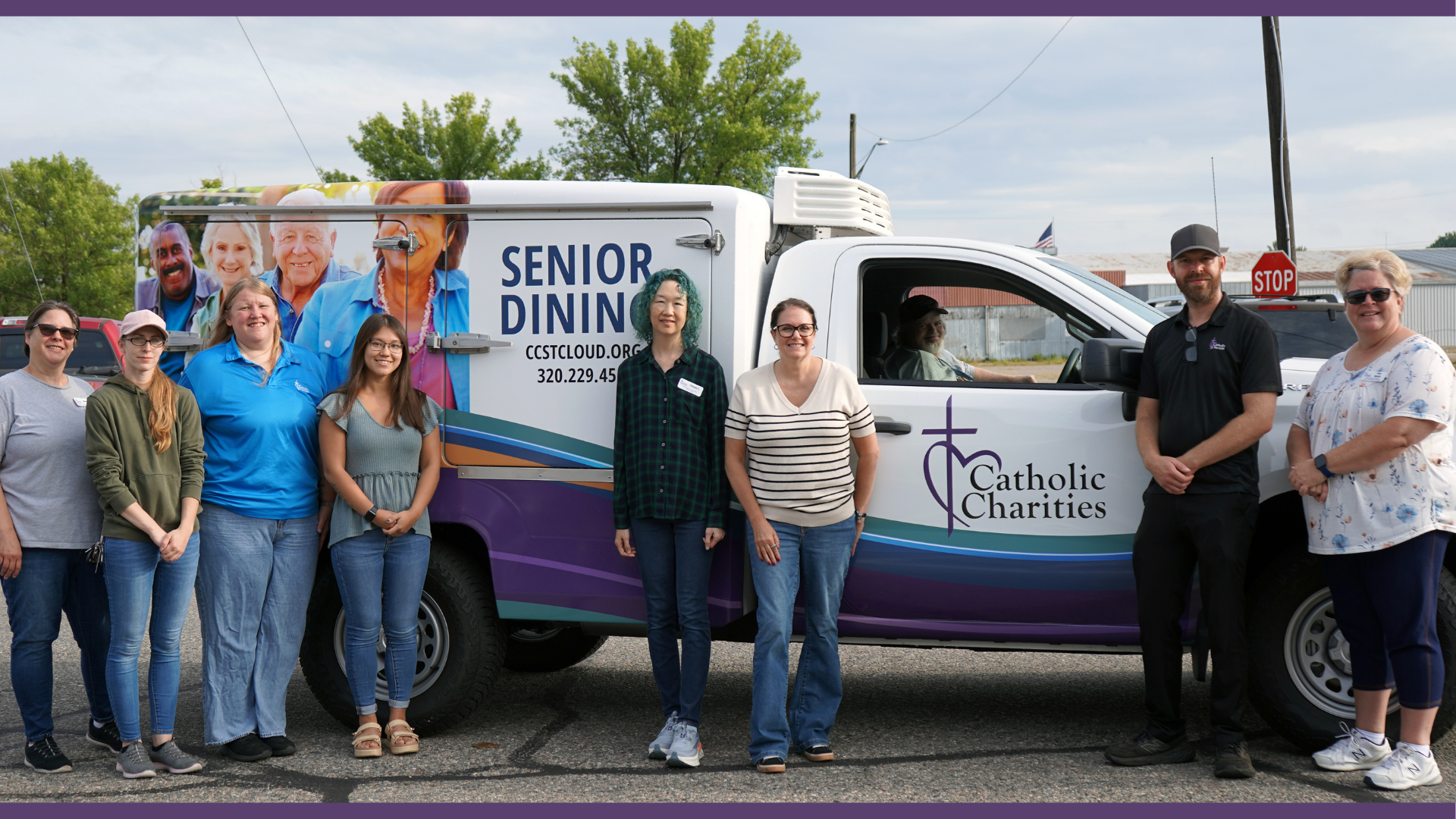
Catholic Charities is expanding its ability to serve older adults across Wright County with the addition of a new hot/cold delivery truck, made possible through funding from the Central Minnesota Council on Aging (CMCOA) and generous community support. The investment will help strengthen and grow Meals on Wheels and Senior Dining services, ensuring nutritious meals reach more seniors safely and efficiently. As the demand for nutritious meal services continues to rise, reliable transportation plays a critical role in connecting older adults with the food they depend on every day. The new truck improves the delivery process by transporting meals from Catholic Charities' production kitchens to community meal sites and home-delivered meal routes throughout the region. Designed with separate heated and refrigerated compartments, the vehicle allows staff to transport hot, fresh meals and frozen meals at the same time while maintaining strict food safety standards. The truck's specialized design ensures meals arrive at the proper temperature, preserving both quality and safety for those receiving them. The vehicle can carry hundreds of meals daily, significantly increasing delivery capacity and operational efficiency. Before the addition of the truck, meals were transported using insulated hot and cold bags, requiring additional handling and limiting the number of meals that could be delivered on each route. Today, hot meals leave the kitchen at approximately 180 degrees and maintain safe temperatures throughout transport, arriving at the recommended serving temperature of 165 degrees. Frozen and refrigerated meals are delivered below 40 degrees, allowing recipients to safely store them upon arrival. The impact extends beyond meal quality. Staff and volunteers now spend less time loading, unloading, and managing insulated bags, allowing them to focus more on serving clients and ensuring deliveries are completed safely and on time. Meals are delivery-ready when the truck arrives at outreach locations, creating a more streamlined process that benefits everyone involved. "Food access for rural seniors continues to be a growing concern," said Stacy Lund, Program Director. "The truck will provide opportunities for Catholic Charities to continue service in our rural communities as operational funding and resources become more limited while community need continues to increase." More than just a vehicle, the new hot/cold truck represents an investment in the future of Meals on Wheels and Senior Dining services. It provides the infrastructure needed to meet growing demand, expand service opportunities, and support older adults who rely on these programs to remain healthy, independent, and connected to their communities. In a fitting tribute, staff have named the truck Grace in honor of Sister Grace, a beloved former employee whose legacy of service continues to inspire the organization's mission today. Like its namesake, Grace will help deliver not only nutritious meals, but also the caring connections that make a meaningful difference in the lives of older adults across Central Minnesota. About Meals on Wheels and Senior Dining Catholic Charities' Meals on Wheels and Senior Dining programs provide nutritious meals and meaningful social connections for older adults throughout Central Minnesota. Through home-delivered and congregate meal services, the programs help individuals maintain their independence, improve food security, and remain connected to their communities. The addition of Grace ensures Catholic Charities can continue advancing that mission for years to come.
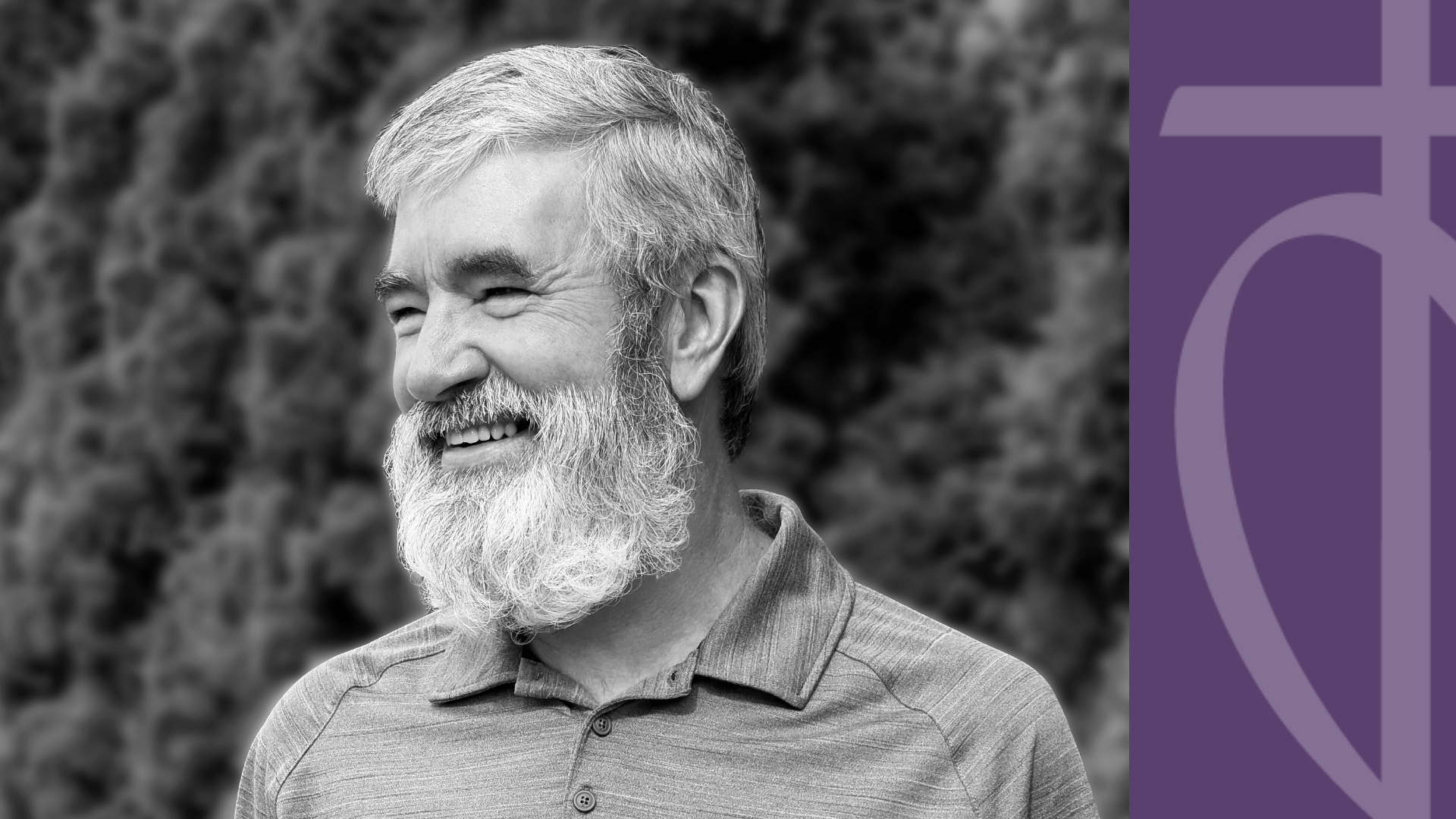
If you've spent time with Brian Woods, you've probably heard a great story.